b-ing Architecture
2026 Año Gaudí
Gaudí Tour
Barcelona is the focus of the world’s attention for all things architectural this year. As well as being the World Capital of Architecture the city is also the epicentre of Año Gaudí, marking the 100th anniversary of the architect’s death. It’s a perfect opportunity to reassess the genius of someone whose work is inextricably connected to Barcelona, the city where the vast majority of his completed works are located. Although some of his projects have turned into money-making machines which locals do their best to ignore, there is still no denying that Gaudí’s oeuvre contains lessons for contemporary architects and urban planners. From upcycling to environmental comfort, water management to structural gymnastics, Gaudí embraced joy and colour in an architecture that above all else was designed to endure.
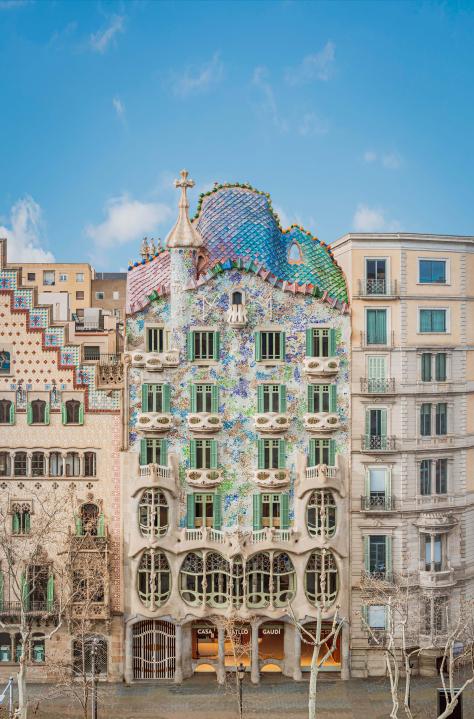
The programme includes exhibitions, virtual reality models, performances, conferences and publications together with a host of academic treatises. Although all the iconic Gaudí buildings will be participating with open door access (Casa Vicens, Casa Mila, Casa Batlló, Palacio Güell) so too will lesser-known local examples of Gaudí’s genius. La Sagrada Familia is naturally in a category of its own, but like the other buildings associated with Gaudí is worth revisiting because there is always something new to be learned and appreciated on closer inspection. The importance of this building (and Gaudí’s legacy) will become evident after 2026 with the demolition of the structures between what was envisioned as the main entrance to the basilica and the Mediterranean.
-
-
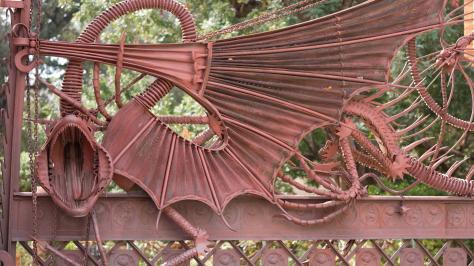
The Pavilions of the Güell Estate
The Güell Pavilions are located in the Pedralbes neighbourhood of Barcelona, including an entrance gate, caretaker’s accommodation and stables. Built originally as an access point within a perimeter enclosure for an estate owned by Gaudi’s great patron Eusebi Guell, the site is nowadays managed by the Barcelona University. The extraordinary ironwork of the metal gates is flanked by two structures that feature the first use of the trencadís technique (broken ceramic used to clad complex 3D forms).
-
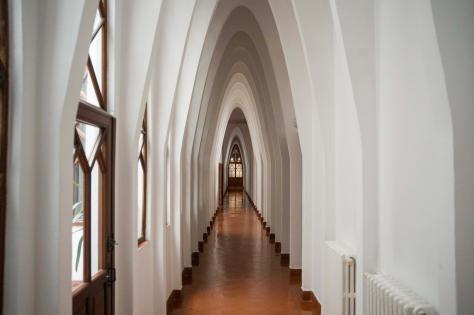
College of the Order of Santa Teresa
A much more modest example of Gaudí’s work is the College of Santa Teresa-Granduxer in Barcelona’s Sant Gervasi neighbourhood. Constructed between 1888 and 89 the massing and the materials reflect the simplicity of the Teresian order, a simple rectangular volume built of brick. However, as this is Gaudí there’s a complexity and eye for detail that defies the simple programme of school and convent. Just as in most of his best-known works the interior and exterior form a single coherent unit, parabolic arches support the various floors and define the internal circulation, while the same parabolic motif frames almost all the windows on the exterior including the castellated parapet with its distinctive four-armed crosses at the corners.
-
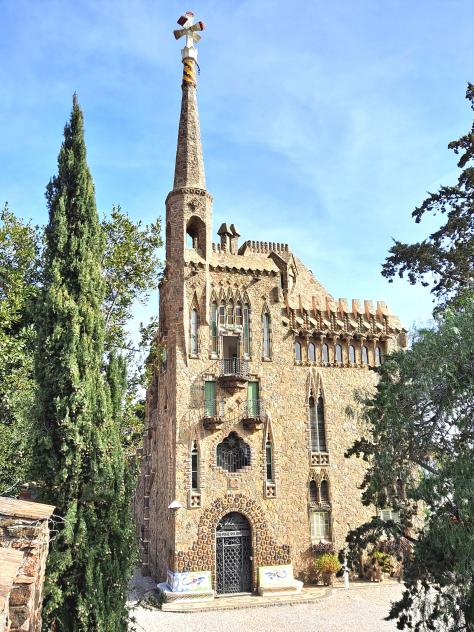
Torre Bellesguard
Another residential project located on the periphery of modern-day Barcelona but intricately connected with its past is Torre Bellesguard. This neo-gothic style castle is as fascinating for its landscaped gardens as its architecture. The grounds of the Bellesguard estate are intricately connected with Catalan history thanks to its pivotal location and the panoramic views it provides of the city and its surroundings. Surviving ruins were incorporated into the scheme by Gaudí, while the main house is provided with a truncated pyramid shaped stone roof that can be access on the outside to a viewing platform on the pinnacle.
-